I’ve called Basel home for twenty years now, and if there’s one thing I’ve learned, it’s that this city doesn’t just "put on" events. We live them.
While most tourists see the Rhine and the red sandstone of the Münster, they often miss the real heartbeat of the city: a fierce local pride that blends high-brow art with gritty, working-class traditions. After two decades here, the city is basically in my DNA—from the specific chime of the Trams to the smell of roasted flour soup in February. If you're planning a broader itinerary across the country, check out our full (Ultimate Guide to Switzerland).
The "Real" Basel: The River & The Bridge
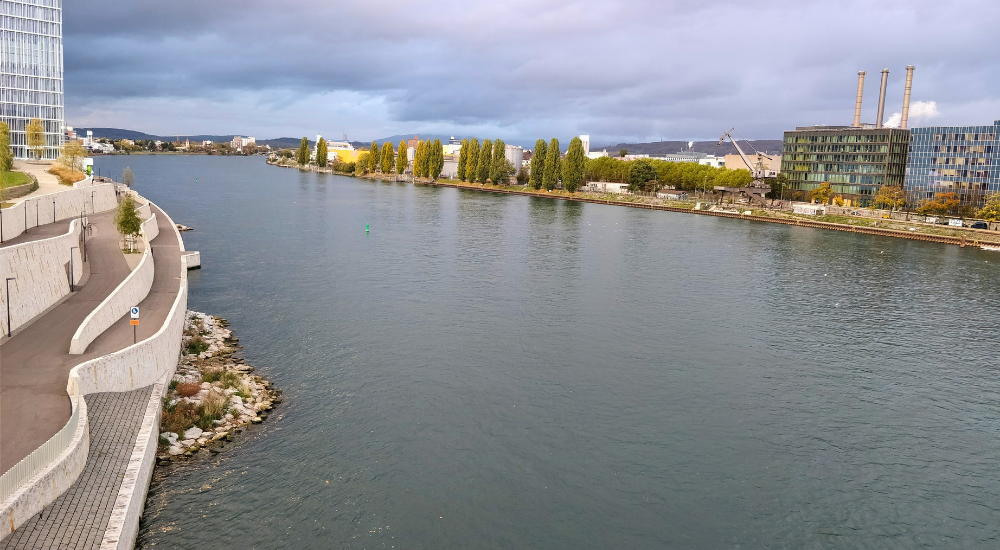
You can’t understand Basel without understanding the river. Grossbasel (up on the hill) is the historic, wealthy "Old Town," while Kleinbasel (on the opposite bank) has always been the working-class heart.
Connecting them is the Mittlere Brücke (Middle Bridge). It’s been standing firm since the 1200s, and for centuries, it was the only bridge over the Rhine between Lake Constance and Rotterdam. It was the ultimate gateway for commerce and culture between Northern and Southern Europe.
Local Secret: Check out that small, chapel-like structure in the middle of the bridge. Today, it’s covered in love padlocks, but there’s nothing romantic about its history—it was actually a site for public executions in the Middle Ages. Dark, right?
But the bridge is also home to my favorite tradition: Vogel Gryff in January. It’s a symbolic "stand" by the three honor societies of Kleinbasel. Watching the Wild Maa (Wild Man) dance on a raft in the middle of the Rhine, his back turned defiantly toward the "rich" side of town, still gives me goosebumps. It’s community pride in its rawest form.
Basel Our Calendar of Traditions
We don't do things halfway here. If you’re coming, try to time it with one of these:
- Fasnacht (Feb/March): Our "Three Best Days." It kicks off at exactly 4:00 AM on a Monday with Morgestraich. The city lights go black, and thousands of masked flutists and drummers march through the dark. It’s haunting, satirical, and honestly, a bit emotional.
- Basel Tattoo (Summer): The second-largest military music show in the world after Scotland. Hearing those bagpipes echo through the Kaserne courtyard is the sound of a Basel summer.
- Autumn Fair (Herbstmesse): This has been going on for over 500 years! The smell of Magenbrot (spiced bread) and the bells of Martinskirche are pure nostalgia.
- Christmas Market: Often voted the best in Europe, it turns the Münsterplatz into an actual fairy tale.
Art in the Streets & Poems on the Border
We’re known as the Art Capital of Switzerland, and our museum density is second only to Amsterdam. But art here isn't just behind glass—it's on the walls. Basel is famous for its Street Art scene; you can take official walking tours, but I love just stumbling upon these urban masterpieces hidden in plain sight.
Our culture is also a mix of three countries. At the Dreiländereck (where Switzerland, France, and Germany meet), we share a unique bond and a unique language.
Insider Tip: Walk the DreylandDichterweg. It’s a border path where poems in our local Alemannic dialect are inscribed every hundred meters—a beautiful tribute to a language that doesn't care about political borders.
Beyond the City: Three Countries in One Day
Because we sit right at the crossroads of France and Germany, some of the best day trips in Europe are literally minutes away.
- The Alsace Region (France): A short hop over the border takes you to one of the world's premier white wine regions. It holds a "sisterhood" with the Champagne region for its incredible sparkling wines (Crémant d'Alsace). You’ve got to visit the medieval villages like Eguisheim, Riquewihr, and Ribeauvillé—they look like they’ve been pulled straight from a storybook. And of course, the grand city of Strasbourg is just a train ride away.
- The Black Forest (Germany): This place needs no introduction. Between the famous Black Forest cake and authentic Cuckoo Clocks, it’s a wonderland. For the thrill-seekers, the Hasenhorn Coaster is a 3km-long mountain coaster run—definitely not for the faint-hearted!
A Gateway Through Time & Castles
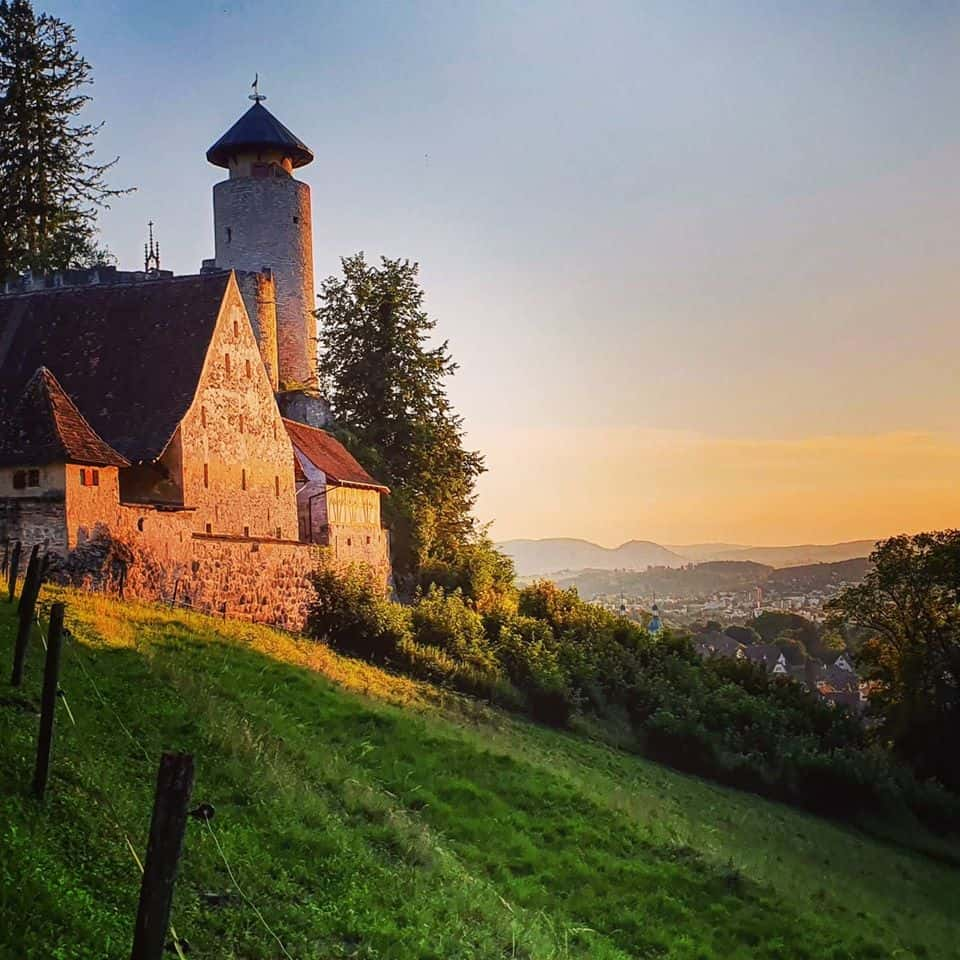
Basel was a massive center of commerce in the olden days, which meant people were always trying to get in. To protect the city from invasions, it was heavily fortified. This is why our countryside is dotted with famous castles and ruins. Exploring the ruins around Basel City is like stepping back into a time of knights and fortresses.
History lives in the smaller details, too:
- The Architecture: You’ll find private houses dating back to the 1200s, the iconic red Rathaus (City Hall) from 1504, and the Münster high school—the second oldest in Europe!
- The Basel Dove Treasure Hunt: Look at the post boxes. You’ll find images of the "Basler Taube," one of the world's most expensive stamps from the pre-Swiss Post era. There are only five of these special mailboxes left—see if you can find them all!
- The Rhine Ferries (Fähri): This is my favorite way to travel. These four wooden ferries use zero electricity. They cross the river using only the natural force of the current. Each has its own name and is run by a specific local family. It’s the most peaceful way to see the city.
Whether you’re hunting for 800-year-old architecture, hopping across borders for a glass of wine, or checking out the latest graffiti, Basel has layers you won't find anywhere else.
Ready to explore? Ping me if you’re heading this way! We will be happy to pull together a customized plan for you, full of medieval secrets, riverfront views, and the best local spots.
This is Basel—are you ready for it?