A trip to Ho Chi Minh City is never truly complete without a visit to the Cu Chi Tunnels. This massive underground network was more than just a series of hiding spots. It was a functioning city beneath the earth where thousands of soldiers and civilians lived, worked, and fought. Today, it stands as one of the most powerful symbols of resilience in the world. Whether you are a history buff or just curious about how people survived in such conditions, this guide will help you prepare for the experience.
Choosing Your Site: Ben Dinh or Ben Duoc
Most travellers do not realize that there are actually two different sections of the tunnels open to the public. Choosing the right one depends on your schedule and what kind of experience you want.
Ben Dinh is the site most tour buses visit because it is only about 50 kilometres from the city. The tunnels here have been widened to make them easier for tourists to enter. It is a great choice if you are short on time or if you feel a bit nervous about tight spaces. However, it can get very crowded and can feel a bit like a tourist attraction.
Ben Duoc is located further out, about 70 kilometres from the city centre. It is five times larger than Ben Dinh and offers a much more authentic feel. The tunnels here are narrower and closer to their original size. It is also home to the beautiful Ben Duoc Memorial Temple. If you want a quieter, more historical experience and do not mind the longer drive, this is the site most experts recommend.
Understanding the Underground City
The engineering of the tunnels is truly remarkable. The network was built on three distinct levels to serve different purposes.
The first level is about 3 meters deep and was built to withstand the weight of tanks and heavy artillery. This is where you will find the ventilation systems and most of the booby traps. The second level sits at 5 meters deep and was used primarily for living quarters and passageways. The third level is the deepest, reaching up to 12 meters down. This level was a haven against heavy bombing and contained field hospitals, kitchens, and command rooms.
What to Expect During the Tour
Every tour usually starts with a short documentary film that explains the history and the construction of the network. After that, your guide will take you through the forest to see hidden trapdoors, ingenious booby traps, and the famous Hoang Cam kitchens, which were designed to hide smoke so enemy planes could not spot them.
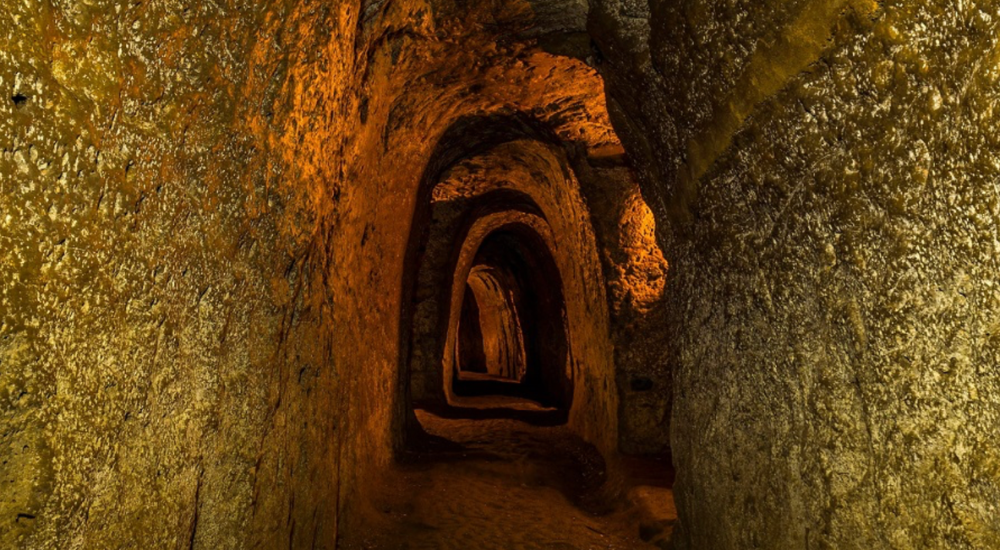
The highlight for many is the chance to actually go inside the tunnels. You can choose to crawl through sections ranging from 20 to 100 meters. Even the widened sections are quite small, so you will likely be squatting or crawling on your hands and knees. It is dark, humid, and dusty, which gives you a very real sense of the challenges faced by those who lived here.
Practical Tips for Your Trip
- What to Wear: Wear dark colored clothing that you do not mind getting dirty. You will be sitting and crawling in red dirt, and white clothes will likely be ruined. Sturdy, closed-toe shoes are a must as the forest floor can be uneven and slippery.
- Health and Safety: If you struggle with claustrophobia, heart conditions, or mobility issues, it is perfectly okay to skip the underground part. You can still see 90 percent of the site from above ground and learn just as much.
- Packing Essentials: The tunnels are located in a jungle area, so insect repellent is vital to protect against mosquitoes. Bring plenty of water and sunscreen as you will be outdoors for several hours.
- The Shooting Range: Both sites have a shooting range where you can pay an extra fee to fire historical weapons like an AK-47 or an M16. This is optional and can be quite loud, so be prepared for the sound of gunfire in the distance.
The Traditional Snack
At the end of your tour, you will be invited to sit down and try a traditional snack of boiled tapioca dipped in a mix of salt, sugar, and crushed peanuts. This was a staple food for the soldiers during the war because it was easy to store and provided much-needed energy. Paired with a cup of hot jasmine tea, it is a simple but meaningful way to end your journey through history.