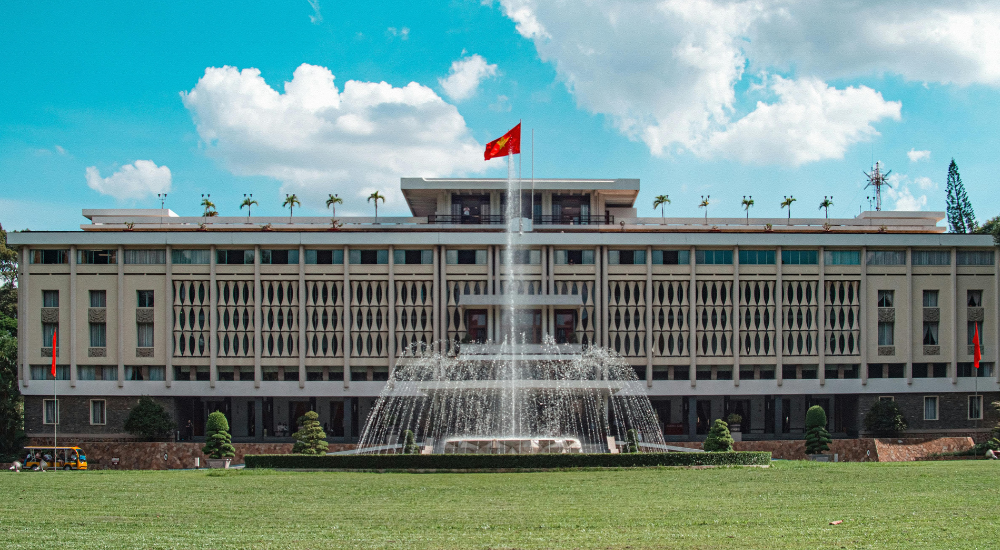
When you walk through the gates of the Independence Palace in Ho Chi Minh City, you are stepping directly into a moment of history that changed the world. Also known as the Reunification Palace, this landmark is not just a museum. It is a time capsule that has remained largely unchanged since the 1970s. For anyone interested in the Vietnam War era or mid-century architecture, this is one of the most important stops in the country.
A Brief History of the Palace
The site where the palace stands has always been a center of power. Originally, a building called the Norodom Palace stood here during the French colonial period. However, after that building was badly damaged in a 1962 bombing attempt, the decision was made to build a brand new structure.
The new Independence Palace was completed in 1966 and served as the home and workplace of the President of South Vietnam. It became famous worldwide on April 30, 1975, when a North Vietnamese tank crashed through its iron gates. This event signalled the official end of the Vietnam War and the reunification of the North and South, which is why it is often called the Reunification Palace today.
Unique Architecture and Design
The palace was designed by a famous Vietnamese architect named Ngo Viet Thu. He wanted to create a building that felt modern but also honoured traditional Eastern philosophy.
If you look at the building from the front, the layout is shaped like a Chinese character that represents "luck" or "good fortune." The architecture is a beautiful example of mid-century modern style. It features large open spaces, clean lines, and stone screens that allow natural light and air to flow through the rooms. Even the surrounding gardens are carefully designed to create a sense of balance and peace in the middle of a busy city.
Exploring the State Rooms and Living Quarters
As you walk through the four floors of the palace, you get a clear look at how the ruling elite lived and worked. The rooms are grand and decorated with traditional art, expensive carpets, and heavy wooden furniture.
You can visit the grand banquet hall, where foreign dignitaries were welcomed, and the cabinet room, where high-level military decisions were made. One of the most interesting parts of the upper floors is the private living quarters of the president. You can see the cinema, the library, and even the rooftop helipad where a helicopter still sits today as a reminder of the frantic final days of the war.
The Secret Underground Bunker
For many visitors, the most fascinating part of the palace is located below ground. The basement contains a massive network of reinforced concrete bunkers designed to survive a direct bombing.
Inside the bunker, you will see the communication rooms filled with old radios, maps on the walls that still show the troop movements of the 1970s, and narrow corridors that feel quite tense even today. It is a stark contrast to the beautiful and airy rooms upstairs. This underground world shows the reality of life during a time of conflict.
The Iconic Tanks on the Lawn
Before you leave the grounds, make sure to walk over to the lawn. You will see two original tanks sitting there: Tank 843 and Tank 390. These are the actual models of the tanks that crashed through the gates in 1975. They are powerful symbols of the country’s history and are a favourite spot for visitors to take photos while reflecting on the significance of the palace.
Practical Information for Visitors
The palace is located right in the heart of District 1 and is very easy to find. It is open daily, though it usually closes for a short break during lunch. There is a small entrance fee, and you can hire a guide or use an audio guide to get more detailed stories about each room. Since most of the palace is not air-conditioned, it is a good idea to visit early in the morning when it is a bit cooler.