Switzerland's Bollywood Connection and More

Blog

The Bollywood Paradise: Switzerland

Written by Jan 18, 2026
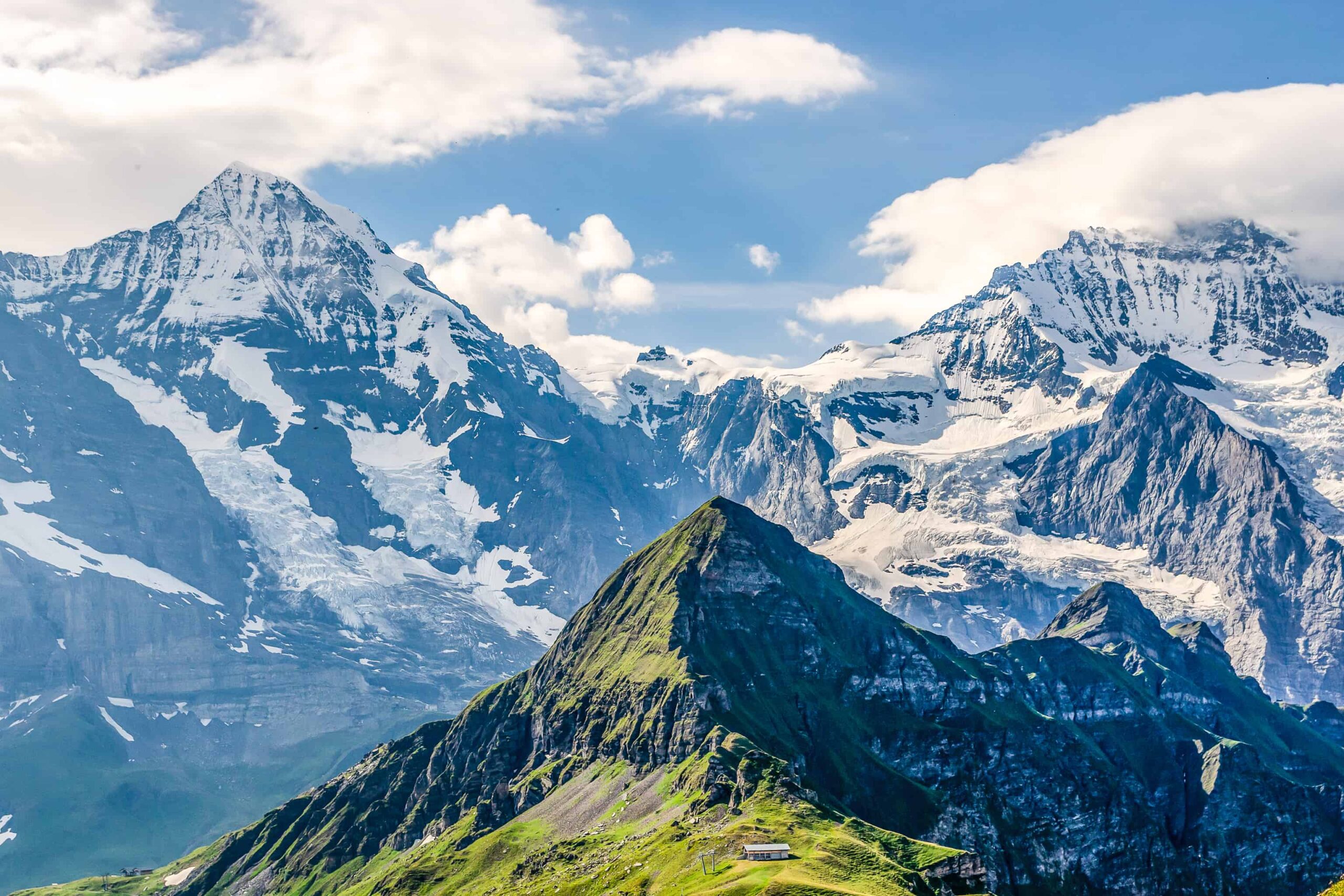
Snow-draped peaks, mirror-like lakes, fairytale villages, and impeccably engineered railways — Switzerland has long been more than just a travel destination. It is a global film set. From classic Hollywood romances to iconic Bollywood blockbusters, the country has played itself on screen so memorably that entire generations associate Switzerland with love, drama, and cinematic grandeur.

This is the story of how Switzerland became one of the world’s most filmed countries — and why filmmakers and travelers continue to return.

Why Switzerland Works So Well on Screen - and off! 

Long before cameras arrived, Switzerland already existed vividly in the world’s imagination. It was the Switzerland of storybooks and illustrations — a land of pure mountain air, snow-dusted chalets, green meadows dotted with wildflowers, and villages where time seemed to slow.

Stories like Heidi fixed this image early: an Alpine childhood shaped by nature, simplicity, and emotional warmth. Postcards, travel posters, and children’s literature reinforced the idea of Switzerland as a place of innocence, romance, and escape. By the time cinema discovered it, Switzerland did not need to be invented — it only needed to be framed.

What makes Switzerland feel instantly cinematic - and you'll feel it as soon as you visit! 

  • Iconic Alpine imagery: Snow-capped peaks, glaciers, cowbells, and flower-filled valleys that feel universally familiar.

  • Storybook settlements: Wooden chalets, stone bridges, lakeside towns, and car-free villages that appear untouched by time.

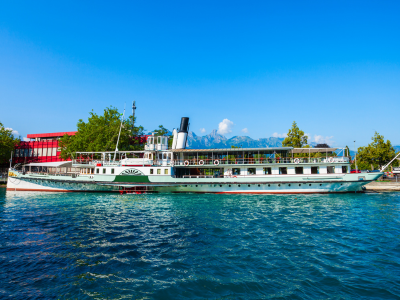
  • Movement through landscapeMountain trains, cable cars, and lake steamers that turn travel itself into a visual narrative.

  • Order and calm: A sense of safety, precision, and balance that contrasts beautifully with dramatic natural settings.

  • Clarity of light: Clean air and high-altitude brightness that you won't find in a lot of places.

Switzerland and Hollywood: A Natural Leading Lady

Hollywood discovered Switzerland early, drawn by its Alpine drama and European elegance.

The Sound of Music (1965)

While much of the film is associated with Austria, key Alpine imagery that shaped the “storybook Alps” perception of Europe was inspired by Swiss landscapes. And while the family ultimately escapes the dangerous political landscape to Switzerland (in reel and real life), the movie scene shows the German/Austrian alps. Not much of an escape! 

Goldfinger (1964)

James Bond’s legendary car chase along the Furka Pass cemented Switzerland’s place in cinematic history. The winding mountain road, glaciers, and sheer drops remain a pilgrimage site for Bond fans.  


On Her Majesty’s Secret Service (1969)

Shot extensively at Schilthorn, the rotating restaurant Piz Gloria became one of the most iconic Bond villain lairs ever filmed — and is now a major tourist attraction. 

Star Wars (Original Trilogy)  

The icy planet of Hoth drew inspiration from Swiss glaciers, influencing how science fiction portrays frozen worlds.   

A Cure for Wellness (2016)

The eerie Alpine sanatorium atmosphere showcased Switzerland’s ability to shift from romantic to mysterious on screen.
Hollywood often uses Switzerland as shorthand for elegance, isolation, or high-stakes drama set against nature. 


Bollywood’s Love Affair with Switzerland

No country outside India is more deeply woven into Bollywood’s visual identity than Switzerland.

How It Started

In the 1960s and 70s, Indian filmmakers began looking beyond studio sets and domestic hill stations for fresh, aspirational backdrops. Switzerland stood out for practical reasons — straightforward filming permissions, political stability, safety, and infrastructure — but also for something less tangible. Its landscapes felt almost unreal to Indian audiences: snowfields instead of monsoons, alpine trains instead of crowded platforms, meadows that seemed endless.

Directors filmed there sporadically at first, but it was Yash Chopra who understood Switzerland’s emotional potential. He didn’t treat it as scenery; he made it part of the story. Under his lens, Switzerland became a place where love could unfold freely — away from social pressures, tradition, and chaos.

Switzerland as the Land of Romance  

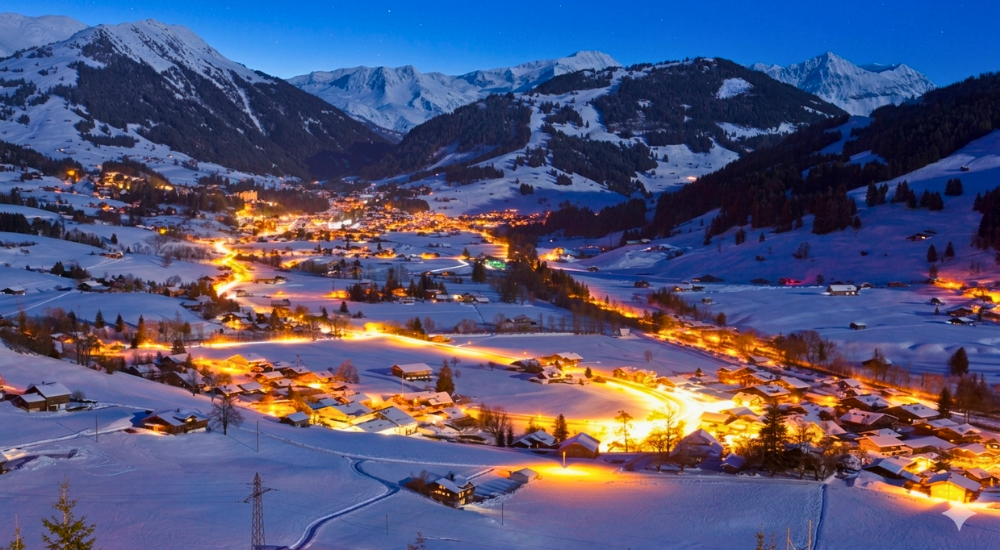
Yash Chopra’s films turned Swiss landscapes, specifically Gstaad-Saanen-Glacier 3000, into emotional shorthand for romance, longing, and destiny.  

In Chandni (1989), Sridevi and Rishi Kapoor danced through snow-covered meadows, introducing an entire generation to the idea of Switzerland as a dreamscape of love. Dilwale Dulhania Le Jayenge (1995) sealed the association forever. Shah Rukh Khan and Kajol, framed by alpine pastures and mountain trains, made Switzerland synonymous with youthful romance and first love — imagery that still defines Bollywood nostalgia today.

Later films such as Mohabbatein, Kabhi Khushi Kabhie Gham, and Veer-Zaara continued the tradition, with actors like Amitabh Bachchan, Shah Rukh Khan, Preity Zinta, and Hrithik Roshan set against lakes, vineyards, and snow-dusted peaks. By then, Switzerland wasn’t just a location — it was a feeling.

For decades, a Bollywood love story felt incomplete without a Swiss song sequence: flowing chiffon saris in the snow, couples framed by glaciers, cowbells echoing in the background - a trope that has become somewhat self referential in newer films like Bachna Ae Haseeno.

This cinematic legacy is so strong that Switzerland actively celebrates it — sometimes in wonderfully unexpected ways. In places like Interlaken, travelers have famously encountered life-size cutouts of Shah Rukh Khan welcoming Indian visitors, and the Lake LauenenSee is now named after Yash Chopra.

Bollywood Film Tourism in Switzerland 

Switzerland is one of the few countries to officially recognize Bollywood tourism. Their love and appreciation is evident from the Yash Chopra Statue by Lake Zurich, marked filming locations in Interlaken, Gstaad, Montreux, and Saanen, Guided Bollywood-themed tours and the Swiss special - excellent marketing campaigns aimed at Indians.  

Most Filmed Locations in Switzerland

Interlaken & Jungfrau Region  

Arguably the most cinematic region in the country — and a quiet star in its own right. 
 
  • Snowfields, waterfalls, alpine villages.
  • Featured heavily in Bollywood and European cinema.
  • Jungfraujoch’s glacier setting offers instant drama.


Lauterbrunnen Valley 

  • The dramatic valley where J.R.R. Tolkien lived after World War I.
  • The landscape directly inspired Middle-earth and The Lord of the Rings.
  • Though LOTR was eventually filmed in New Zealand, its emotional and visual DNA traces back to Lauterbrunnen’s cliffs and waterfalls.

Zermatt & the Matterhorn 

  • One of the world’s most recognizable mountain silhouettes.
  • Used for luxury, romance, and high-altitude adventure scenes.
  • Car-free village adds to the timeless aesthetic.

Lucerne & Lake Lucerne 

  • Medieval bridges and lakefront promenades.
  • Ideal for romantic sequences and historical dramas.

Montreux & Lake Geneva 

  • Elegant, Riviera-style scenery.
  • Popular for emotional, reflective scenes.

Schilthorn 

  • A rare case where a film location became more famous after filming.
  • Piz Gloria remains a Bond landmark.

Not a cinema fan?

That's perfectly alright. Switzerland is not just meant to be a highlights reel. The Grand Swiss Journey is really a journey of depth connected by scenery, rhythm, and emotion. Cinema revealed Switzerland to the world. Thoughtful curation allows you to experience it fully. 

This is not a destination you rush through. It is a journey you move through — deliberately, beautifully, and with purpose. 

Looking for more on Switzerland? Here's the Ultimate Swiss Traveler's Guide. 
Related Posts

FAQ & Expert Tips

Best time to visit in Switzerland

Switzerland is an all-weather country from traveling perspective and it really depends on what one is looking to experience. Most of the tourists tend to visit Switzerland between May – September considering these are the summer months in Switzerland with July-August as the peak summer months.

If you were to consult a local, the spring season in late March-April and Autumn during October to mid-November is equally good time to visit as the temperatures are still moderate and with the added benefits of no major traveler’s rush – unless your travel coincides with a local European holiday or long weekend. Winters are very pristine with charming Christmas markets all over and festivities are in the air. It tends to get reasonably cold but with one of the best standards of living in the world – the lodging and travel is very comfortable in most parts. Of course December – February is the ideal season for winter sports enthusiast, and even if skiing / snowboarding isn’t what excites you – sledging down a snow mountain with kids is an experience that one shouldn’t really miss.

What are the best places to visit in Switzerland?

For a small country like Switzerland, it certainly packs in a punch and even after living here for decades, we keep on discovering new experiences. As such Switzerland has 26 Kantons, but it can broadly be categorised into four parts, the German region on the north and north-eastern side bordering Germany and Austria, Central Switzerland (often referred to as Bernese Oberland), The French region in central-west and south-western side bordering France, The Italian region on south-eastern side bordering Italy.

The German Region
With the obvious choices of visiting cities like Zurich, Basel, one must not miss out the places like Appenzell, St. Gallens, and Lake Konstanz region on the swiss side offers fantastic choices during every season. Then, of course Baden and Rheinfelden famous for its thermal baths and spas along with historic old towns are worth a visit as well. For history buffs, its noteworthy to visit Chur as one of the oldest cities in Switzerland and for its charming old town as well. The neighboring Kanton Schwyz is famous for the Swiss knife valley – and one can perhaps learn how the world famous Swiss knifes are made in an old factory and museum.

The Berne Oberland (Central Switzerland)
Most commonly held imagery of Switzerland is often of snow covered mountains, alpine peaks, lakes, charming alpine villages and no wonder this region hosts everything that a traveler desires with cities like Lucerne, Interlaken, Bern, and famous alpine peaks – Mt. Titlis, Jungfrau, Eiger, Monch, Pilatus etc. And, if one has more time it’s definitely a very charming experience to spend time in the alpine villages like Grindelwald, Lauterbrunnen, Wengen, Murren, Stanserhorn; most of these are great winter resorts for snow sports, and some of the best hikes (easy to difficult ones) are in this region. Besides this, Kandersteg, Andermatt, Alpine passes, Graubünden, Sedrun etc. will completely change your perspective of what Switzerland got to offer. Of course, in each of these places – there are so many different experiences and hidden gems that without a local expert it’s very difficult to explore all the best sights.

The French Region
While Lake Geneva region dominates a good part of what this region offers with cities like Geneva, Lausanne, and Vevey-Montreux as the most obvious choices. But, venturing out to Zermatt, Lavaux Vineyards, Leukerbad for it’s thermal baths in winters, and bit up north towards Lake Neuchatel region, Gstaad-Saanen (Ten Chalet Villages) and Fribourg is something that most travelers tend to miss out. There are of course so many unique experiences including famous chocolate and cheese factories, farm house stays, agritourism etc. that one learns to appreciate the French way of life.

The Italian Region
Considering its geographic position, this region of Switzerland has the highest number of sunshine hours in entire Switzerland and with lake side town of Lugano, Locarno – the Italian flair is truly in the air. For folks interested in medieval castles – Bellinzona is definitely worth a visit and if you want to hob-nob with international celebrities and CEOs then visiting the resort town of Davos during World Economic Forum event isn’t a bad idea. Besides this, Davos is also one of the luxury winter resorts in Switzerland and during summer offer great walks and hikes along the lake side and in St. Moritz.

As per a recent survey, most tourists typically end up experiencing not more than 3% of the Switzerland, which is not surprising as mostly they rely on internet searches or stories of fellow travelers – who have come here on group tours in bus coaches. Of course, group tours have their own utility but it’s hardly surprising that most travelers miss some of the great experiences in Switzerland without any support and advice from local experts. We truly believe that local knowledge and support is extremely critical as there are so many hidden gems and a lot of time is lost in figuring out these experiences. When you experience a new country with Catterfly, you are part of our community and are always supported by experts, who design not only the great experiences based on your preferences but also support you all the way through your journey.

How many days are needed to visit Switzerland?

Most people have just a week or two to explore this amazing country, and we certainly hope that you are lucky to make several visits. In a week-long trip, you could perhaps explore one or two regions of Switzerland in depth (like central & French region), or focus on the iconic locations like Zurich, Bern, Grindelwald, with some day tours from these locations. There is more an enough to experience in each of these places for the famous and off beat experiences for everyone’s taste.

What is the best time to visit Switzerland?

Switzerland is an all-weather country from traveling perspective and it really depends on what one is looking to experience. Most of the tourists tend to visit Switzerland between May – September considering these are the summer months in Switzerland with July-August as the peak summer months.

If you were to consult a local, the spring season in late March-April and Autumn during October to mid-November is equally good time to visit as the temperatures are still moderate and with the added benefits of no major traveler’s rush – unless your travel coincides with a local European holiday or long weekend. Winters are very pristine with charming Christmas markets all over and festivities are in the air. It tends to get reasonably cold but with one of the best standards of living in the world – the lodging and travel is very comfortable in most parts. Of course December – February is the ideal season for winter sports enthusiast, and even if skiing / snowboarding isn’t what excites you – sledging down a snow mountain with kids is an experience that one shouldn’t really miss.

What are the visa and insurance requirements for Switzerland?

In principle, everyone needs a valid travel document to visit Switzerland, but some EU/EFTA citizens with expired travel documents may be allowed to cross the border on exception basis. Travel documents of third-country nationals for a short stay not exceeding 90 days in any period of 180 days, however, must be valid for at least three months after the planned departure from Switzerland and have been issued within the previous ten years. The date of issue of the travel document is what counts, regardless of any official extension.

For nationals of most countries, one also needs to obtain a visa. Depending on the purpose of your travel to Switzerland, there are different types of Swiss visas that will apply to the occasion. Whether you are planning to go on a visit, study or work and reside there permanently, you will have to apply for a different Swiss Visa, accordingly. For visiting purposes, generally a Schengen visa needs to be obtained and one can apply three months before the date of the travel. If the purpose of travel is to pursue employment, then a work permit will be required.

Above information is for guidance purposes only. To find out if you need to obtain a visa, and if there are any specific requirements for your travel documents, please consult the respective Swiss diplomatic/consular mission nearest to you. Alternatively, contact us and we can provide required guidance if you are planning to travel for tourism purposes.

Medical insurance is a mandatory requirement for all travelers coming to Switzerland, and mostly it is needed as a part of visa application itself. The amount of medical insurance coverage is mentioned specifically as a part of the visa processing requirement, so check with the local Swiss Embassy before you apply for visa. Online insurance provider in most countries offer very reasonable policies that can be bought online itself, and the insurance premium is dependent on the number of days that one plans to spend in Switzerland.

If you don’t need a visa to enter Switzerland, then its important that either you have an insurance in your home country that provides coverage as you travel overseas. Many a times the credit card firms also offer it as a part of their package, so it’s a good idea to check with your credit card firm as well. If insurance coverage is not provided by your existing insurance provider in home country or any other means (like credit card package), then it is highly recommended to buy a insurance cover before you travel to Switzerland. 

What is the weather in Switzerland like?

Switzerland climate is moderate with no excessive heat, cold or humidity especially in lowlands. But, the good news is the seasons are distinguishable - summers(June to August - daytime temperature range is), autumn (September to November), winters (December to February) and Spring (March to May). Sometimes in April the winter returns for a short period and sometimes there could be summer conditions as early as May. In spring (March to May) the trees blossom and the meadows turn green. From July to August the daytime temperature range is 18 to 28 °C (65° - 82° F) and from January to February the range is -2 to 7 °C (28° - 45° F). In spring and autumn, the daytime temperature range is 8 to 15 °C (46° - 59° F).  

Depending on the altitude the temperature range may vary. It is highly recommended to visitors to pack a sweater, good walking shoes, sunscreen, sunglasses, a compact umbrella and/or a light rain coat. The winters

The best time depends on your plans. If you are well prepared, you'll have a wonderful trip regardless of the time of year. Any doubts about your plans? Feel free to ask for advice from our local experts.

How to plan a trip to Switzerland?

Some of the most commonly asked questions are around when to travel, which places to visit, and how to get around. In general, any time is good to visit Switzerland and it really depends on your plans. Summer months between June to August is the time when most tourists plan their trip but the shoulder months during Spring and autumn are an equally good time to visit especially if you prefer a bit of solitude. Winters are a special time to visit with Christmas festivities until December, and snow sport enthusiasts ruling the roost in January and February. 

In a week long trip most people tend to focus more on central and Northern part of Switzerland with base locations in Lucerne, Interlaken and Zurich (or Basel). However it's easy to squeeze in few days in Lake Geneva in n a week long trip. If one has few additional days then it's highly recommended to keep it for Italian.rt of Swiss, or visiting neighboring parts of Germany and France. It's not an easy decision to make especially on a first trip to Switzerland and we are happy to help you prioritize and make the right choices.  

How to travel to Switzerland?

Switzerland is a landlocked country and surrounded by France, Germany, Austria, Italy (and a small country Lichenstein). It is very well connected by Air, Train and land transport and best option depends on where you are traveling from and the overall itinerary.  

If you are traveling from outside of Europe, then the most frequently used airports are Zurich and Geneva, while Basel also works fine for the travelers who are traveling from within Europe. If one is traveling only to Switzerland, then it is a good idea to travel into Zurich and flying out of Geneva – unless you are planning to spend all your time only one part of Switzerland, or the flight prices / timing is convenient to fly in and out of the same airport. While it’s a small country, the distances between different locations can be substantial and you may want to optimize on the time spent in getting back to the same airport to fly back home.

For travelers coming in from neighboring countries, the trains are a great option as well as most of the trains traveling across countries would pass thru Basel and Geneva (for trains coming in from France and Germany), Zurich (for trains coming in from Germany and Austria), and Lugano (for trains coming in from Italy). Most of the cross-country trains typically require a seat reservation as well and it is not enough to have a travel pass (e.g. Eurail passes) or a train ticket only.

And, if you like to drive then road network from neighboring countries seamless flows into Switzerland. Of course, you must carry the required traveling documents with you all times even if some of the entry points at the border are not staffed in late evening hours. Traveling by road is a popular option for travelers within Europe. However, you must consider that there is a road tax of (around CHF 40) and one must buy a vignette (valid for one calendar year) at the border entry points (or a gas station near the country border) else you could potentially face a fine for violating the rules. In recent times, some private bus operators like Flixbus also offers great connections to the main cities in Switzerland.  

Where to stay in Switzerland?

Most popular choices to stay in Switzerland are Lucerne and Interlaken, as travelers typically spend time visiting central Switzerland or use this as the base to go around for a short trip of 4-5 days. However, depending on the overall plan, you should consider other locations. For e.g. Lake Geneva region is best explored by staying in that region (Geneva, Lausanne, Vevey-Montreux). Some resort towns / villages like Zermatt, Grindelwald, Gstaad-Saanen, Wengen etc. are also popular among travelers who want to indulge in mountain activities (hiking, skiing, sledding etc.) or just enjoy the serene landscape.  

Zurich and Geneva is a good choice for first or last few days of your travel depending on your flight timings. We also recommend considering Basel as the base location for few days, if you would like to explore the Three-Country region which is truly unique with charming French towns and villages in Alsace region and Blackforest region of Germany (all within an 1-2 hours away).

What is the best way to get around in Switzerland? How does public transportation in Switzerland work?

Train travel is one of the best way to travel in Switzerland; it’s economical and popular with both locals and tourists. The stations are clean and equipped with general purpose services and the trains are punctual, clean and comfortable. Unless you have a off the beaten track kind of itinerary or have very limited time to explore, get on the train and experience life as the locals do. You’ll be exposed to spectacular scenery and a way of life for most Swiss people. If you are traveling by train, then one of the best investments one can make is to buy a Swiss train pass (available for 3, 4, 8 and 15 days), or a combination of some regional pass and half-fare pass. Consult our destination experts, and they will advise you on the best combinations that suits your itinerary.  


For visiting mountains, you would likely need to take the cable car or the mountain trains, and these are mostly discounted on Swiss travel pass (and some of these mountains can be accessed free of charge as well). Likewise, the boat cruises are very popular among tourists to explore the regions aronund the popular lakes in Lucerne, Interlaken and Geneva.  

Self-drive car - Driving around is a great option for travelers, who would like to go off the beaten track. While most places in Switzerland are very well connected by public transport, it may be faster or more convenient to explore if one is driving around. Especially in the mountain passses in the central Switzerland. However, one must consider that the fuel cost and parking cost is reasonably high as compared to other Western countries.

Traveling by Taxi / Chaffeur driven cars - This is easily available in most of the big cities and for intercity transits as well. However, it is mostly a very expensive option unless the cost is shared by a larger group of people traveling together.

What are the daily expenses in Switzerland? What currency to carry?

Switzerland's official currency is the Swiss franc also called as CHF.

Switzerland is a relatively expensive country to visit and the average cost for a backpacker/budget traveler is around CHF 75-100 to cover the basics, stay in some hostels, sightseeing and local transport, and perhaps have a basic meal outside. It's difficult to give a specific figure because all travellers have their own individual needs and interests. A Switzerland Tourism survey shows that visitors spend an average of CHF 100 to 200 per day on meals and accommodation in Switzerland (excluding outbound and return travel). Some of the average cost and guidance for managing different aspects of travel in Switzerland

Accommodation:
Can range from CHF 40-45 per night in a hostel with shared dorms and toilets to 150-250 chf per night in hotel and Swiss Chalet / apartments for a mid-range options. It can also vary by the time of the year and the prices are typically higher during the summer and the winter months (for ski break). Of course, there is no upper range for luxury options in hotels and Swiss chalets in mountain resorts - that offer very exclusive experiences.  

Travel within Switzerland: Cost typically around CHF 50-60 per day, if one is using the Swiss travel pass to go around. However, the mountain cable cars and trains typically cost extra, unless its already covered by Swiss travel pass.  

Meals: one can easily toss up their own meals if staying in a hostel or a place with fully equipped kitchen (in chalet / apartments / holiday homes). The cost of eating out in Switzerland can be quite substantial in a regular restaurant - average of CHF 30-40 per person per meal. However, there are options available in CHF 10-20 range with the takeout pizzas, sandwiches and Turkish Kebab shops - which offer good choices for vegetarians and non-vegetarians alike. One can also shop around in the regular stores like Migros and CooP for pre-cooked meals at reasonable budget range.  

What is the best time to visit Switzerland for a winter holiday?

The best time to visit Switzerland for a winter holiday is typically from December to February when you can enjoy the snowy landscapes and winter sports.

What is the snow conditions like in Switzerland during the winter season?

Snow conditions can vary depending on the region and the time of year. In higher-altitude areas like the Swiss Alps, you can expect abundant and consistent snowfall during the winter. Lower-altitude regions may have less snow. It's advisable to check the snow conditions and ski resort websites for up-to-date information.

Are there family-friendly activities in Switzerland for winter vacations?

Switzerland is a family-friendly destination. Many ski resorts offer childcare services, kid-friendly slopes, and activities such as ice skating, sledding, and snowshoeing suitable for children. Some resorts also have special kids' clubs and winter camps.

Can I rent winter sports equipment in Switzerland?

Yes, you can easily rent winter sports equipment such as skis, snowboards, boots, and even clothing at most ski resorts and in major cities. Rental shops offer a variety of options for different skill levels. Many resorts offer package deals that include lodging, lift tickets, and sometimes even equipment rentals.

Are there any festivals or events in Switzerland during the winter?

Switzerland hosts various winter festivals and events. The Montreux Jazz Festival in Montreux, the Lauberhorn Ski Races in Wengen, and the Fasnacht (Carnival) celebrations in Basel are some of the highlights. Be sure to check the event calendar or get in touch with us for specific dates.
  • 0
  • 0

Cart

  • {{ item.documentId.name }}