1. Thang Long Imperial Citadel
The Imperial Citadel is a UNESCO World Heritage site and a powerful symbol of Hanoi’s history. It served as the political center of the country for thirteen consecutive centuries. When you walk through the South Gate, you are standing on ground that has been the seat of power for various Vietnamese dynasties.
One of the most interesting parts of the citadel is the excavation area where archaeologists found layers of old palaces and artifacts buried beneath the surface. You can also visit the D67 House and Tunnel, which served as the secret military headquarters during the Vietnam War. It is a fascinating place where you can see the maps and old telephones exactly as top commanders used them.
2. The Temple of Literature
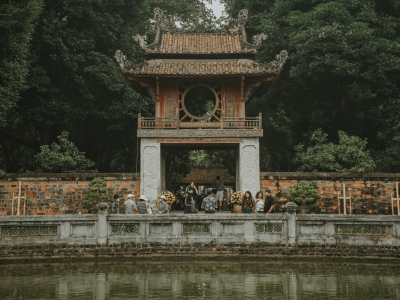
Built in 1070, the Temple of Literature is a peaceful oasis dedicated to Confucius and the history of education. It was the site of the first national university in Vietnam. The architecture is a beautiful example of traditional style, featuring five courtyards, quiet ponds, and ancient trees.
The highlight of the temple is the collection of eighty-two stone stelae shaped like tortoises. Each one carries the names of scholars who passed the difficult royal examinations hundreds of years ago. To this day, students still visit the temple to pray for good luck before their own exams. It is one of the most picturesque and calm spots in the city.
3. Ho Chi Minh Mausoleum Complex
This is the final resting place of President Ho Chi Minh, the most respected leader in Vietnamese history. The mausoleum itself is a grand stone building located in the center of Ba Din Square. It is a place of deep respect, and you will see many locals queuing for hours to pay their tributes.
Within the same complex, you can visit the modest Stilt House where the President lived and worked, as well as the One Pillar Pagoda. This tiny wooden temple was built in 1049 and sits on a single stone pillar in the middle of a lotus pond. It is designed to look like a lotus flower blossoming from the water and is one of the most iconic sights in the capital.
4. The Old Quarter
The Old Quarter is the living heart of Hanoi. It is a square kilometre of narrow streets where each road was traditionally named after the goods sold there, such as Silver Street or Silk Street. Even today, many of the streets still specialize in their original trades.
The best way to see the Old Quarter is on foot or by a traditional cyclo. You will see ancient temples tucked between modern shops and traditional tube houses that are incredibly narrow but very long. Make sure to visit the Bach Ma Temple while you are here. It is one of the four guarding temples of the city and is dedicated to the White Horse that helped build the city walls.
5. Voi Phuc Temple
Another of the four guarding temples of Hanoi is the Voi Phuc Temple, which translates to the Kneeling Elephant Temple. It is located near Thu Le Park and is surrounded by lush gardens and large ancient trees.
The temple was built to honour a prince who fought against invaders, and the two stone elephants kneeling at the entrance give the site its name. It is a very quiet place that many tourists miss, but it offers a beautiful look at the spiritual side of the city, away from the heavy traffic.
6. Hoan Kiem Lake and Ngoc Son Temple
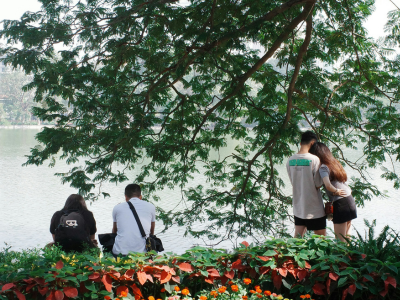
No visit to Hanoi is complete without a walk around Hoan Kiem Lake. This is the social center of the city where you can see locals practicing Tai Chi in the morning and couples walking at sunset.
In the middle of the lake sits the Ngoc Son Temple on a small island. To reach it, you must walk across the Huc Bridge, a bright red wooden bridge that is one of the most photographed landmarks in Vietnam. The temple is dedicated to a legendary general and is a great place to learn about the local folklore involving a giant golden turtle that lived in the lake.