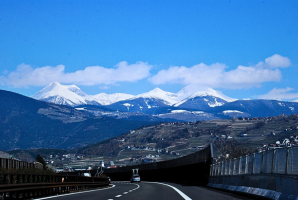
Switzerland is one of the few countries where the journey itself is as unforgettable as the destination. Its panoramic train routes are not simply scenic transfers — they are living heritage lines, engineered to reveal the country’s most spectacular landscapes in comfort and style.
From glacier-fed valleys and soaring Alpine passes to vineyard-lined lakeshores and Belle Époque resorts, Switzerland’s most iconic sights unfold directly along historic rail corridors. These routes connect car-free mountain villages, cogwheel railways, cable cars, and lake cruises into a single, seamless network — making train travel the most authentic way to experience classic Switzerland.
This guide explores Switzerland’s legendary panoramic rail journeys and the alpine, cultural, and lakeside icons they unlock along the way.
The Glacier Express: Zermatt, the Matterhorn & High-Alpine Switzerland
Often referred to as the world’s slowest express train, the Glacier Express is designed for immersion rather than speed. Over roughly eight hours, it crosses 291 bridges and 91 tunnels, threading its way through deep gorges, high mountain passes, and broad Alpine valleys as it links Zermatt, Interlaken, and St. Moritz.
Large panoramic windows frame ever-changing scenery — from remote Valais hamlets to icy highlands where glaciers spill toward the tracks.
Zermatt & the Matterhorn
Zermatt is one of Switzerland’s most iconic mountain villages, set beneath the sharply pyramidal Matterhorn. The village is entirely car-free; visitors arrive by train via Täsch, where private vehicles are left before continuing by shuttle rail. Within Zermatt, electric taxis and hotel shuttles make it easy to get around on foot.
Zermatt is a key mountain transport hub with direct access to major viewpoints. The Gornergrat Railway climbs to 3,089 metres for sweeping views of the Matterhorn, Monte Rosa massif, and the Gorner Glacier. The Matterhorn Glacier Paradise cable car reaches 3,883 metres, the highest cable car station in Europe, offering year-round snow and cross-border views into Italy and France.
In winter, Zermatt has over 360 km of ski pistes linked with Cervinia, while summer skiing is available on the Theodul Glacier. Warmer months are ideal for hiking, with well-marked trails such as the Five Lakes Walk. The village centres around Bahnhofstrasse, with shops, rentals, and dining, making Zermatt suitable for a day visit or a short multi-night stay.
Experiences along the route
Matterhorn Glacier Paradise (Klein Matterhorn)
Reach nearly 4,000 metres at Europe’s highest cable car station, with panoramic views across Swiss, Italian, and French Alpine peaks. Year-round snow, glacier viewing platforms, and ice tunnels make this a standout high-altitude experience.
Gornergrat
Accessible by historic cogwheel railway from Zermatt, this panoramic ridge offers close-up views of the Matterhorn alongside 28 other peaks over 4,000 metres and sweeping vistas of the Monte Rosa massif and surrounding glaciers. From here, short scenic hikes such as the Gornergrat Panorama Trail and access to the Five Lakes Walk (5-Seenweg) add rewarding alpine walking options.
Rhine Gorge
Often called the “Grand Canyon of Switzerland,” this dramatic limestone gorge between Ilanz and Reichenau can be explored on foot, by bike, or by rafting boat, offering a striking contrast to Switzerland’s high-alpine landscapes.
Lake Sils
Located at 1,800 metres in the Engadin Valley, Lake Sils features Europe’s highest regular scheduled passenger boat service, combining tranquil lake cruising with expansive mountain views.
Corvatsch
At 3,303 metres, Corvatsch is the eastern Alps’ highest summit station, known for reliable snow conditions, far-reaching glacier views, and access to high-altitude hiking trails in summer and skiing in winter.
The Bernese Oberland Lines: Interlaken, Grindelwald & Alpine Adventure
Interlaken sits at the geographic heart of Switzerland’s rail network, positioned between Lake Thun and Lake Brienz. From here, regional trains branch into dramatic Alpine valleys, making the Bernese Oberland one of the country’s most accessible mountain regions without a car.
A key link is the Bernese Oberland Railway (BOB), opened in 1890 and electrified in 1914, which connects Interlaken Ost with the resort towns of Grindelwald and Lauterbrunnen. Trains operate as a coupled service from Interlaken to Zweilütschinen, where they divide—one continuing into the Grindelwald valley, the other into the Lauterbrunnen valley. Beyond serving these villages, the line provides seamless access to the Jungfrau Region, including onward connections to the world-famous Jungfraujoch – Top of Europe.
Today, the Bernese Oberland Railway functions as a modern, high-frequency shuttle, efficiently linking Interlaken with the tourism hubs of the Eiger, Mönch, and Jungfrau region and forming the backbone of rail travel through the heart of the Bernese Alps.
Grindelwald & First Mountain
Grindelwald lies beneath the imposing north faces of the Eiger, Mönch, and Jungfrau. The village combines classic Alpine scenery with a lively adventure culture, all connected directly by train.
Experiences connected by rail
First Mountain & Cliff Walk
Cable cars ascend from Grindelwald in three stages to Grindelwald First at 2,166 metres. Here, the First Cliff Walk by Tissot clings to sheer rock faces, delivering dramatic valley views and close-ups of the Eiger’s north face. From the summit, well-marked hiking trails lead to Bachalpsee, a gentle, roughly two-hour return walk known for its clear reflections of surrounding snow-capped peaks.
Glacier Gorge
A short walk from the village centre leads into the Glacier Gorge, a narrow canyon carved by glacial meltwater. Elevated walkways reveal swirling turquoise streams, waterfalls, and polished rock formations, offering a striking look at the geological forces that shaped the Bernese Alps.
Alpine adventure hub
Grindelwald First is also a centre for high-energy activities. The First Flyer zipline sends riders 800 metres through the alpine landscape at speeds of up to 84 km/h, while mountain carts and trottibike scooter routes provide fast descents back toward the valley. Families are well catered for, with playgrounds and easy trails around the Bort mid-station.
Scenic connections
Grindelwald links seamlessly with the Luzern–Interlaken Express, the Jungfrau mountain railways, and long-distance scenic routes such as the Glacier Express, allowing travellers to combine alpine adventure with some of Switzerland’s most iconic rail journeys.
GoldenPass Express: Gstaad, Glacier 3000 & Alpine Elegance
The GoldenPass Express is among Switzerland’s most visually diverse rail journeys. Linking Interlaken and Montreux, it travels through emerald valleys, chalet villages, mountain passes, and refined resort towns — offering a transition from rugged Alps to lakeside elegance.
Experiences along the route
Glacier 3000
Reached from the Col du Pillon, Glacier 3000 provides access to high-altitude terrain above the Bernese Alps. The area offers year-round snow conditions, clearly marked walking routes, and broad viewpoints across surrounding mountain ranges, making it one of the most accessible glacier environments without technical equipment.
Peak Walk Suspension Bridge
Linking two summits at over 3,000 metres, this narrow suspension bridge crosses above glacier fields and exposed rock, with views extending toward Mont Blanc, the Matterhorn, and the Bernese Alps in clear weather.
Gstaad Village
Gstaad’s compact, largely car-free centre is defined by traditional wooden chalets, local boutiques, and long-established hotels. The village works well as a base for walking, light hiking, and scenic rail exploration rather than as a sightseeing-heavy stop.
Château-d’Oex (Pays-d’Enhaut)
Located along the GoldenPass route, Château-d’Oex sits in a wide alpine valley and is known for its hot-air ballooning tradition. The village also provides access to valley walks, cycling routes, and characteristic Pays-d’Enhaut chalet architecture, offering a quieter contrast to higher Alpine resorts.
Montreux & Lake Geneva
At the western end of the route, Montreux marks a clear transition from mountain terrain to lakeside scenery. A long promenade follows the lake’s edge, while nearby rail and boat connections open up Chillon Castle, Lavaux vineyards, and surrounding Riviera towns.
The Swiss Riviera by Train: Lavaux, Vevey & Montreux
As the GoldenPass Express descends toward Lake Geneva, Switzerland reveals one of its most striking contrasts. Alpine slopes soften into terraced vineyards, palm-lined promenades replace pine forests, and lakeside towns glow in southern light.
Set along the northeastern shore of Lake Geneva (Lac Léman), the towns of Vevey and Montreux form the heart of the Swiss Riviera, where a mild climate, vineyard-covered slopes, and Alpine views come together. This stretch marks a clear transition from mountain Switzerland to a more southern, lakeside character.
Vevey at a Glance
Vevey lies in the French-speaking part of Switzerland, directly on Lake Geneva with uninterrupted views of the Alps. Its lakeside setting, cultural depth, and relaxed pace have earned it the nickname “the pearl of the Swiss Riviera.” The town is compact and walkable, making it easy to explore in a short visit.
A natural starting point is the lakeside promenade, where a statue of Charlie Chaplin looks out over the water. From here, narrow lanes lead into the old town, passing historic buildings, small boutiques, and cafés before reaching the Grande Place, one of Switzerland’s largest market squares. Markets are held here every Tuesday and Saturday.
Another key attraction is the Alimentarium, a unique museum dedicated entirely to food and nutrition, reflecting Vevey’s long-standing culinary traditions.
Chaplin’s World & Vevey’s Cultural Legacy
Vevey was home to Charlie Chaplin during the final 25 years of his life. Just above town in Corsier-sur-Vevey, Chaplin’s World is located in his former residence, Manoir de Ban. The museum combines personal living spaces with interactive exhibitions and film sets, offering insight into both Chaplin’s artistic legacy and private life. His presence is also commemorated by the lakeside statue along the promenade.
Lavaux Vineyards (UNESCO World Heritage Site)
Surrounding Vevey are the Lavaux vineyard terraces, Switzerland’s largest contiguous wine-growing region, covering around 800 hectares. The steep, stone-walled terraces rise above Lake Geneva and benefit from a unique triple exposure: direct sunlight, reflected light from the lake, and heat stored in the stone walls.
Wine villages such as Saint-Saphorin, Dézaley, and Epesses are linked by walking and cycling paths, with viewpoints overlooking the lake and Alps. The Train des Vignes, a short scenic rail line, connects Vevey with Puidoux-Chexbres in just twelve minutes, making vineyard exploration easy without a car. Tastings are available at many local cellars, and traditional pintes—small, family-run eateries—serve regional dishes alongside local wines.
A long-distance walking route runs from Lausanne-Ouchy to Chillon Castle, with educational circuits explaining vineyard history, grape varieties, and wine production along the way.
Montreux & Chillon Castle
Further along the lake, Montreux is known for its mild climate, lakeside setting, and cultural calendar. Cafés line the waterfront, while the old town rises gently above the promenade. A lakeside walk leads to the statue of Freddie Mercury, closely associated with the town.
Just outside Montreux stands Château de Chillon, Switzerland’s most visited historic monument. Built on a rocky island at the lake’s edge, the medieval castle can be explored independently or on guided tours, with options that include wine tastings. Booking in advance is recommended, particularly in peak season.
From Montreux, cogwheel trains climb to Rochers-de-Naye, offering wide views over Lake Geneva and into the Swiss and French Alps, while nearby Mont-Pèlerin provides panoramic viewpoints from its “Plein Ciel” observation tower.
Other Iconic Panoramic Rail Routes to Know
Switzerland’s classic rail experience extends well beyond a single route, allowing travellers to weave together regions effortlessly.
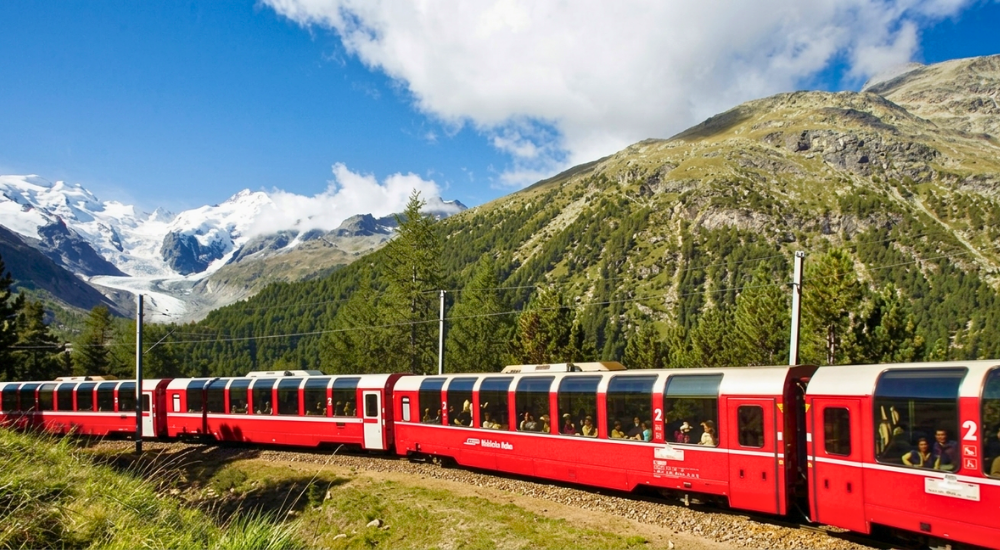
Bernina Express
A UNESCO-listed route crossing glaciers, spiral viaducts, and high passes as it descends toward the palm-lined landscapes of southern Switzerland.
Gotthard Panorama Express
Combines historic rail lines and lake cruises, tracing Switzerland’s historic north–south passage between Ticino and Lucerne.
Luzern–Interlaken Express
A vital connector between lake country and the Alps, often paired with longer panoramic journeys through central Switzerland.
Why Switzerland Is Best Experienced by Rail
In Switzerland, trains are not a compromise — they are the experience. They place travellers directly into the landscape, remove the stress of driving mountain roads, and connect iconic sights with precision and comfort. From glacier routes and Alpine legends to vineyard shores and historic towns, Switzerland’s railways offer the most immersive way to experience the country’s enduring magic.