One of the most surprising things for first-time travellers to Vietnam is just how much the weather can change from one end of the country to the other. Because Vietnam is long and narrow, it stretches across different climate zones. It is entirely possible to be shivering in a thick jacket in the northern mountains while people are sunbathing on a tropical beach in the south.
To help you pack your bags and plan your route, here is a clear breakdown of how the weather differs between the North, Central, and South regions.
The North: Four Distinct Seasons
Unlike the rest of the country, Northern Vietnam (which includes Hanoi, Sapa, and Halong Bay) experiences four distinct seasons.
From November to February, the North is in its winter phase. It is cool and dry, but in places like Sapa, it can get surprisingly cold with temperatures sometimes dropping near freezing. If you visit Hanoi during this time, you will need a light jacket or a sweater.
From May to August, the region becomes very hot and humid with frequent summer rains. This is the best time to see the rice paddies at their greenest, but be prepared for the heat. For many, the best months to visit the North are September to November or March to April, when the weather is mild, and the skies are usually clear.
Central Vietnam: The Transition Zone
The weather in Central Vietnam (home to Da Nang, Hoi An, and Hue) follows its own rules. This region stays warm for most of the year, but it has a very specific rainy season.
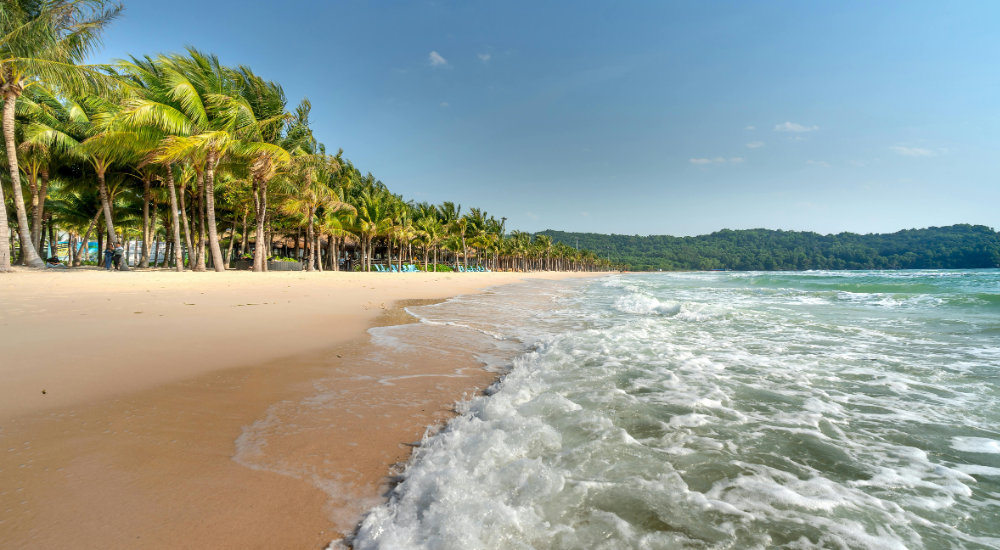
The dry season here runs from January to August. This is the perfect window if you want to enjoy the beaches of Da Nang or walk through the ancient streets of Hoi An under sunny skies.
However, from September to December, the region enters its rainy season. This part of the country can experience heavy rainfall and occasional storms. If you are planning a beach holiday, it is best to avoid these late months of the year.
The South: Tropical and Consistent
Southern Vietnam, including Ho Chi Minh City and the Mekong Delta, has a tropical climate that stays warm all year round. Instead of four seasons, the South only has two: the dry season and the rainy season.
The dry season lasts from November to April. This is generally considered the best time to visit the south because the humidity is lower and the skies are blue. It is the perfect time for exploring the city or taking boat trips through the delta.
The rainy season runs from May to October. While it does rain frequently, these are usually quick afternoon tropical downpours that clear up fast. You can still travel during this time, but you should always carry a light poncho or an umbrella.
When is the Best Time for the Whole Country?
If you are planning to travel from the North all the way to the South in one trip, timing can be a challenge. To get the best balance of weather across all regions, the months of March, April, and October are usually your best bet.
During these months, the North is warming up or cooling down comfortably, the Central coast is dry and sunny, and the South is not yet at its hottest or wettest point.