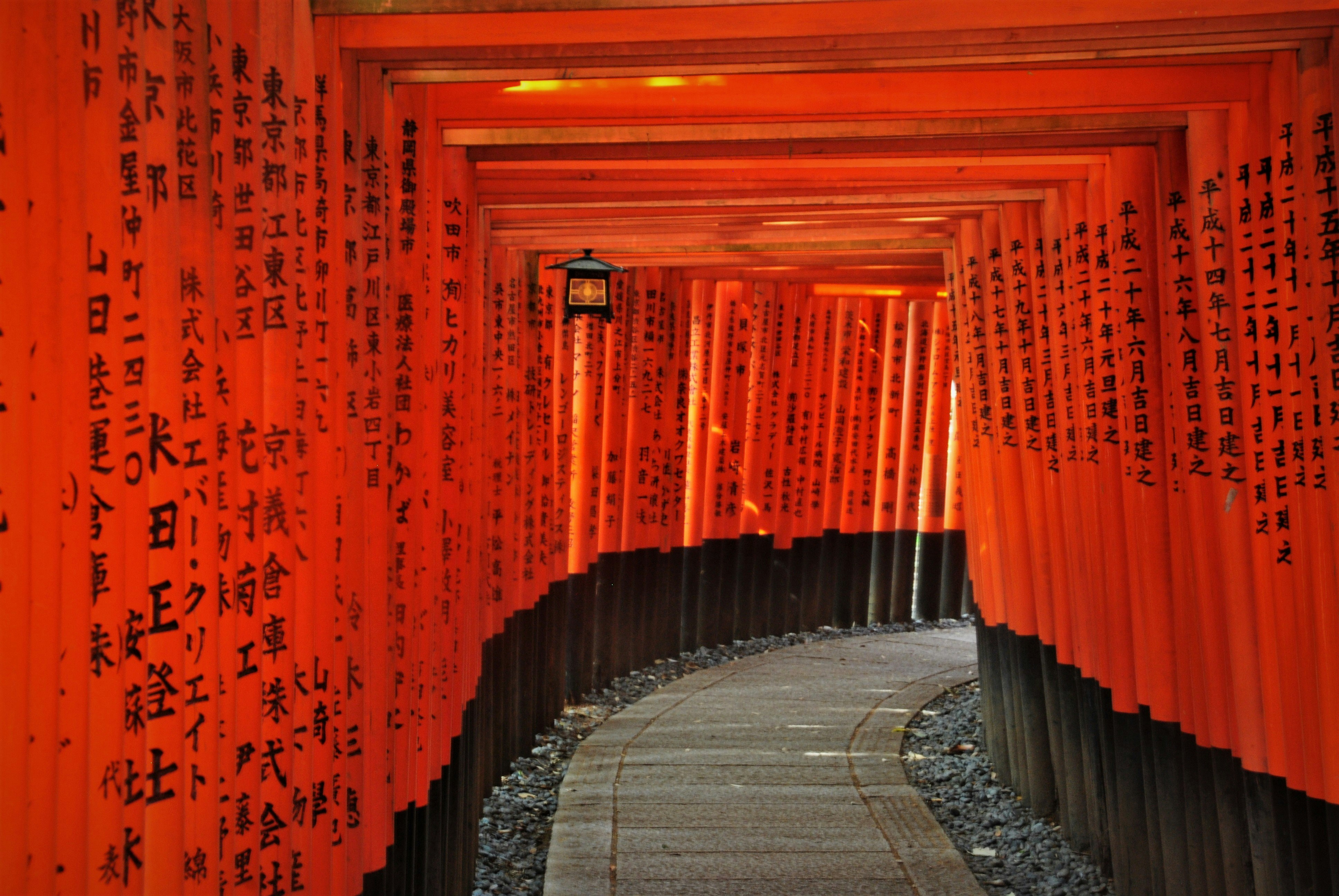
You have likely seen photos of the endless rows of bright red gates - this is Fushimi Inari Taisha, an important Shinto shrine in southern Kyoto. It is the most significant of thousands of shrines dedicated to Inari, the god of rice and business.
The Gates: There are approximately 10,000 vermilion torii gates lining the trails that lead up the 233-meter Mount Inari.
The Messengers: Throughout the grounds, you will see many statues of foxes (kitsune), which are believed to be the divine messengers of Inari. Many of these foxes hold a key in their mouth, representing the key to the rice storehouse.
The Hike: The lower section features Senbon Torii ("thousands of torii gates"), where two dense rows of gates create a hypnotic tunnel. A full hike to the summit takes about 2–3 hours, but you can turn back at any time. About halfway up is the Yotsutsuji intersection, offering a great view over Kyoto.
Admission: The shrine is free to enter and is open 24 hours, making it a great spot for an early morning or even a "Midnight Hike" to avoid the biggest crowds.
Logistics: The Nara Connection
Fushimi Inari is located right outside JR Inari Station, which is the second stop from Kyoto Station on the JR Nara Line. Because it is on this specific line, it is the perfect first stop for a day trip to the historic city of Nara.
Easy Travel: The train ride from Kyoto Station to Inari Station takes only about 5 minutes.
Next Stop, Nara: After you finish exploring the red gates, you can jump back on the JR Nara Line and head south to reach Nara in roughly 30–45 minutes.
Nara & Todai-ji Temple: Deer and the Giant Buddha
Once you arrive in Nara, a short walk or bus ride will take you to Nara Park, a massive green space that is home to hundreds of freely roaming deer.
The Famous Deer: These deer are considered "messengers of the gods" and are a symbol of the city. You can buy special shika senbei (deer crackers) for about 200 yen to feed them - some have even learned to bow to ask for a treat!
Todai-ji Temple: Located within the park, this UNESCO World Heritage Site is home to the Daibutsuden (Great Buddha Hall), one of the world's largest wooden buildings.
The Great Buddha: Inside the hall is the Daibutsu, a massive bronze Buddha statue that stands 15 meters tall.
A Fun Challenge: Behind the statue, there is a wooden pillar with a hole in it that is said to be the same size as the Buddha's nostril. It is believed that if you can squeeze through the hole, you will reach enlightenment or have good luck.
Nandaimon Gate: Before entering the temple, you will pass through this huge wooden gate, which is guarded by two 8-meter-tall statues of fierce Nio Guardian Kings.
Adding the Mt. Fuji Views
Many travelers want to see Mt. Fuji as part of their Kyoto trip. However, it is important to know that Mt. Fuji is not in Kyoto - it is about halfway between Tokyo and Kyoto. The best way to see it is to plan a 1- or 2-day stop in the Lake Kawaguchi area:
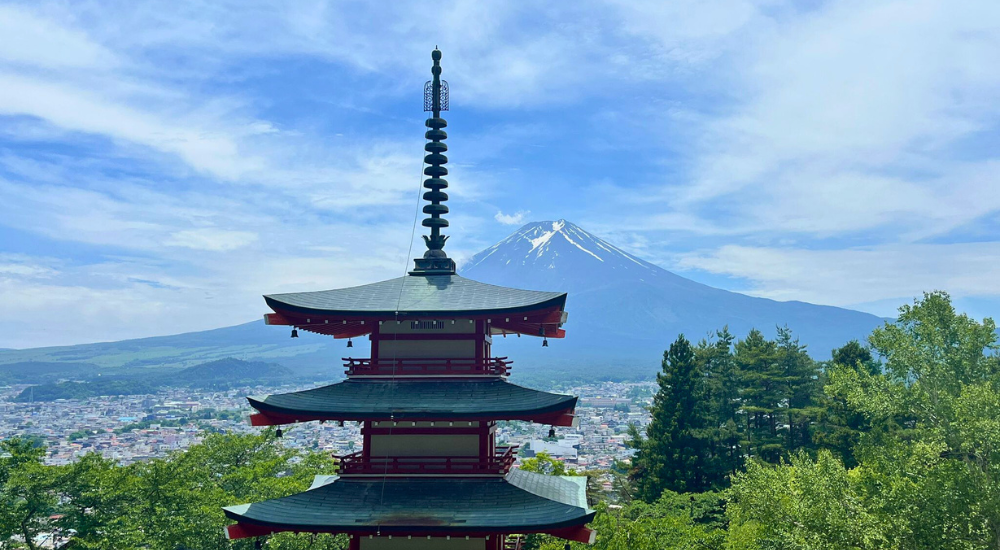
Arakurayama Sengen Park: This is where you get the famous "postcard" view of the Chureito Pagoda with Mt. Fuji in the background.
Oishi Park: Located right on the edge of Lake Kawaguchi, this park is famous for its flowers and clear views of the mountain across the water.
How to get there: You can take a bus or train from Tokyo, or a direct bus from Mishima Station (which is a stop on the Shinkansen bullet train line between Tokyo and Kyoto).