Few destinations ignite the imagination like Egypt. Its monuments — the Pyramids, the Sphinx, temples along the Nile — are instantly recognizable. But the real wonder lies in the stories they tell: of pharaohs who ruled as gods, of architectural feats that defied nature, and of beliefs about eternity that shaped entire landscapes of stone.
For modern travelers, standing before a pyramid or stepping into a painted tomb becomes infinitely richer when you understand the context. This guide explains Egypt’s pyramids, temples, and tombs in ways that connect them not only to their own history, but to the wider world — so you can see how ancient Egypt fit into the global story of humanity.
A Quick Primer on Ancient Egypt
When you’re visiting sites, the dates can feel abstract. Here’s a timeline with global touchpoints that help anchor Egypt in its world context:
- Old Kingdom (c. 2700–2200 BCE) – The Age of the Pyramids
- Home to the first pyramids, including Djoser’s Step Pyramid and Khufu’s Great Pyramid at Giza.
- At the same time, the Indus Valley Civilization in South Asia was building planned cities with advanced drainage systems, while Stonehenge in Britain was being raised.
- Middle Kingdom (c. 2050–1700 BCE) – Art and Literature Flourish
- Egypt shifted from monumental pyramids to refined art, literature, and rock-cut tombs.
- Contemporary with Babylon’s rise under Hammurabi in Mesopotamia and the Shang dynasty’s early foundations in China.
- New Kingdom (c. 1550–1070 BCE) – Egypt’s Golden Age
- The great builders: Hatshepsut, Tutankhamun, Ramses II. This was the age of Karnak, Luxor, Abu Simbel, and the Valley of the Kings.
- Globally, the Olmec civilization was carving colossal stone heads in Mesoamerica, and in South Asia, the earliest Vedic texts were being composed.
- Late Period and Beyond (c. 664 BCE onwards) – Foreign Rule and Blending Cultures
- Persians, Greeks, and Romans left their imprint. Cleopatra VII, Egypt’s last pharaoh, lived in the 1st century BCE.
- In the same era, Rome was rising to dominance, and in India, the Mauryan Empire would soon spread Buddhism across Asia.
Traveler’s takeaway: By Cleopatra’s time, the Great Pyramid was already older to her than she is to us.
Pyramids: Monuments of Eternity
The Giza Plateau
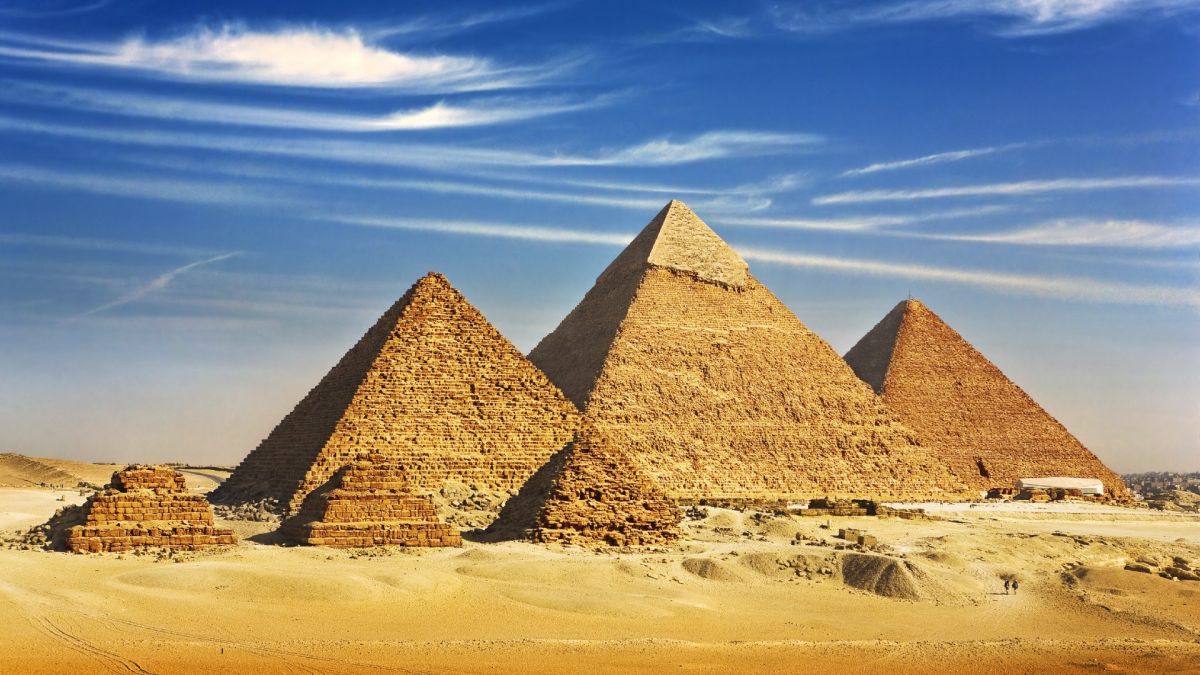
Nothing says “Egypt” like Giza’s skyline.
- The Great Pyramid of Khufu: Built around 2600 BCE, it stood as the tallest structure on Earth for over 3,800 years. While Egyptians perfected pyramid building, the Indus Valley Civilization was thriving on the other side of Asia.
- Khafre’s Pyramid and the Sphinx: The second pyramid appears taller due to its plateau position, but its real icon is the Great Sphinx — a lion-bodied guardian with a pharaoh’s face.
- Menkaure’s Pyramid: Smaller, but originally clad in rich granite.
Tip: Don’t miss the Solar Boat Museum, where Khufu’s reconstructed cedar ship illustrates the pharaoh’s intended journey into eternity.
Beyond Giza: Saqqara & Dahshur
- Step Pyramid of Djoser (Saqqara): The world’s first monumental stone building, designed by the architect Imhotep.
- Red and Bent Pyramids (Dahshur): Built by Sneferu, Khufu’s father, they show pyramid engineering in progress — one angle too steep, the next perfected.
These lesser-visited sites are atmospheric and quieter than Giza, with the added bonus of seeing pyramids in relative solitude.
Temples: Houses of the Gods
Temples were not tombs — they were the center of worship, where priests performed daily rituals to sustain the gods and maintain cosmic order.
Karnak & Luxor (Thebes, modern Luxor)
- Karnak Temple Complex: Imagine a religious city. Its Hypostyle Hall is a forest of 134 massive columns, each inscribed with hieroglyphs. While Egyptians built Karnak, the Shang Dynasty in China was casting bronze ritual vessels and recording the earliest Chinese characters on oracle bones.
- Luxor Temple: Known for its night lighting and once linked to Karnak by a 3 km-long Avenue of Sphinxes, recently reopened to the public.
Abu Simbel
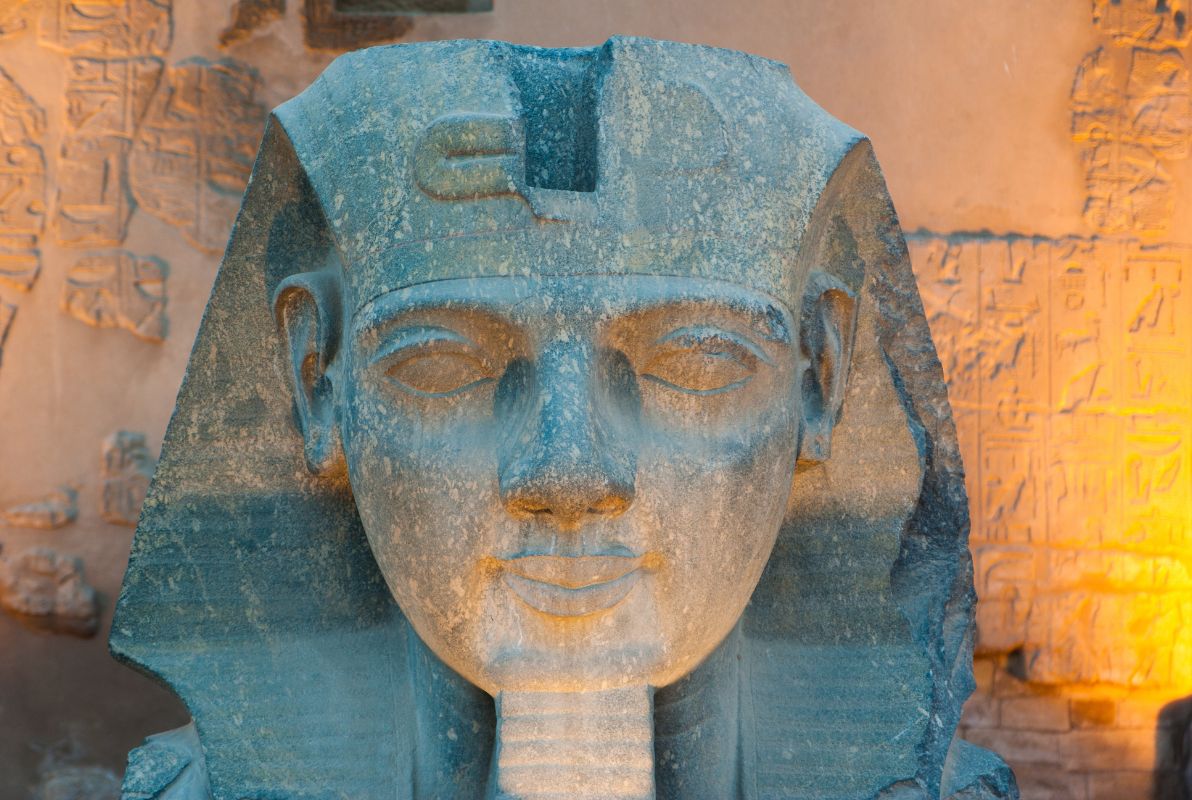
Carved into cliffs under Ramses II (c. 1250 BCE), the four seated statues radiate power. Inside, scenes depict Ramses as a warrior-king. While these statues faced the Nile, far away in Mesoamerica, the Olmecs were raising their colossal stone heads.
Philae Temple (Aswan)
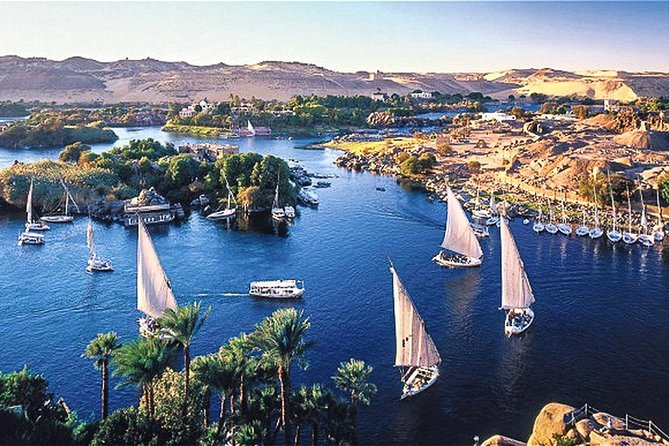
Dedicated to Isis, goddess of magic, Philae’s island setting makes it one of the most photogenic temples in Egypt. Like Angkor Wat in Cambodia centuries later, its reflection in water adds to its mystique.
Edfu & Kom Ombo (Nile Cruise Stops)
- Edfu Temple: Dedicated to Horus, remarkably well preserved. Its reliefs read like a manual of temple ritual.
- Kom Ombo Temple: A rare double temple — half for Horus, half for Sobek, the crocodile god. The adjacent museum displays crocodile mummies, a reminder of the Nile’s wild side.
Tombs: Gateways to the Afterlife
The Valley of the Kings (Luxor’s West Bank)
New Kingdom pharaohs abandoned pyramids and hid their burials in cliffs.
- Tutankhamun’s Tomb: Small, but his intact treasure hoard changed archaeology forever. He was buried around the same time the Olmecs flourished in Mexico.
- Ramses VI’s Tomb: Famous for its celestial ceiling depicting the goddess Nut swallowing the sun each night.
- Seti I’s Tomb: The most elaborate, but requires a premium ticket.
The Valley of the Queens
- Nefertari’s Tomb: Known as the “Sistine Chapel of Ancient Egypt,” its vivid colors have survived over 3,000 years. These paintings predate the birth of the Buddha in India by centuries.
Tombs of the Nobles
Less crowded but equally fascinating. Instead of royal grandeur, you’ll see scenes of agriculture, music, and banquets — a glimpse into everyday life.
The Pharaohs You’ll Hear About Most
- Djoser: Commissioned the Step Pyramid — the first monumental stone structure in history.
- Khufu (Cheops): Builder of the Great Pyramid.
- Hatshepsut: The queen who ruled as king; her mortuary temple at Deir el-Bahari is breathtaking.
- Akhenaten: Introduced monotheistic worship of Aten, the sun disk — a religious experiment centuries before similar ideas arose elsewhere.
- Tutankhamun: A minor king, but his intact tomb captured the world’s imagination.
- Ramses II (the Great): Egypt’s most famous ruler; builder of Abu Simbel and countless temples. His reign overlapped with the later Mycenaean period in Greece and early Shang rule in China.
How to Experience Ancient Egypt Today
- Go Early: Tombs and temples are best seen at sunrise before crowds and heat set in.
- Hire a Guide: Hieroglyphs, cartouches, and mythological scenes are much more engaging when explained.
- Museums: The Egyptian Museum in Cairo houses Tutankhamun’s treasures; the upcoming Grand Egyptian Museum near Giza will display the full collection. Luxor Museum is smaller but beautifully curated.
- Rules to Know: Photography is restricted in many tombs unless you buy a special permit. Respect these — they preserve fragile pigments.
- Practical Packing: Light clothes, hats, sturdy shoes, and plenty of water. Temple visits mean long walks under the sun.
Quick Reference for Travelers: What Guides Might Mention
Even the best guides assume some familiarity with Egypt’s world. Here’s your cheat sheet:
- The Book of the Dead – A collection of spells to guide souls through the afterlife. Expect to see fragments painted on tomb walls.
- Ma’at – The principle of cosmic order, truth, and balance. Pharaohs were judged by how well they upheld it.
- Ka & Ba – Two parts of the soul: ka was the life force, ba the personality that could move between worlds.
- Anubis – Jackal-headed god of mummification and cemeteries. You’ll see him painted on tomb walls, usually weighing hearts.
- Osiris – God of the afterlife, often shown in mummy wrappings with green skin.
- Isis & Horus – Mother and child pair; Isis resurrected Osiris, Horus avenged him. This imagery echoes across cultures.
- Cartouche – An oval-shaped hieroglyph enclosing royal names. Spotting these tells you which pharaoh commissioned what.
- Obelisks – Tall stone pillars, usually quarried at Aswan. Many now stand in Rome, Paris, London, and New York.
- Rosetta Stone – Discovered in 1799; the key to deciphering hieroglyphs because it had Greek, Demotic, and hieroglyphic text.
Pro tip: If you remember just “Ma’at, Anubis, and cartouches,” you’ll impress your guide.
Visiting Egypt’s pyramids, temples, and tombs isn’t just about checking off world wonders — it’s walking through the world’s first great civilization, one that connected itself to eternity through stone. From the Giza plateau to the painted tombs of Luxor, each site is part of a global story. The more you know about the pharaohs, their gods, and their world, the more vivid those stories will become when you stand among the ruins yourself.